Power Bench Supply - Complete UK Guide
65W vs 100W USB‑C Charger UK: Which Should You Buy?
TL;DR: For most UK buyers, a 65W USB‑C PD GaN charger is the best-value choice for MacBook Air, Dell XPS 13-class laptops, tablets and phones. Choose a 100W USB‑C PD GaN charger if you own a 15–16" performance laptop, frequently charge two devices at once, or you’ve seen “slow charger”/battery drain under load. Based on our testing on UK mains, 100W only pays off when your laptop can genuinely use the extra headroom—and when you pair it with a 5A E‑Marked USB‑C cable.
If you’re searching for 65W vs 100W USB‑C charger UK, here’s the direct answer: 65W is enough for everyday laptops and travel, while 100W is the safer buy for larger or higher-performance laptops and multi-device charging. However, the “right” wattage depends on your laptop’s USB‑C Power Delivery (PD) requirement, your typical workload, and whether you’ll be splitting power across ports.
At Jaogau Bench Power, we bench-test USB‑C chargers for stability, heat and real-world output on UK 230V mains. So, rather than repeating spec-sheet claims, this guide focuses on what actually matters for UK buyers: laptop compatibility, cable requirements, plug size, and value.
Key Takeaways
- The 65W sweet spot: Best for 13–14" ultrabooks, phones and tablets—especially for commuting and carry-on.
- The 100W upgrade: Best for 15–16" laptops, sustained workloads (editing/compiling), and charging multiple devices simultaneously.
- GaN matters in the UK: It helps keep chargers compact despite the bulk of a Type G (BS 1363) plug and reduces heat.
- Cables can bottleneck you: To actually reach 100W you typically need an E‑Marked 5A USB‑C cable; many standard cables cap at 60W.
What’s the difference between a 65W and 100W USB‑C charger?
The difference is simply maximum power output: a 65W charger can deliver up to 65 watts, while a 100W charger can deliver up to 100 watts (assuming your device and cable support it). In practice, that extra 35W matters most when:
- your laptop can draw more than ~60W during heavy use,
- you want the laptop to charge while working (not just “hold” the battery), and
- you’re charging a second device and the charger is sharing power between ports.
Importantly, a higher wattage charger is not “too powerful” for a smaller device—USB‑C PD negotiates power, so an iPhone or earbuds will only take what they need.
Should I buy a 65W or 100W USB‑C charger in the UK?
If you want a quick rule that matches most UK shopping decisions:
- Buy 65W if your main laptop is a MacBook Air, Dell XPS 13, ThinkPad T-series/EliteBook 14", or you prioritise portability and price.
- Buy 100W if you use a 15–16" laptop, do sustained heavy work (video editing, coding builds, 3D), or regularly charge a laptop + phone/tablet together.
Next, we’ll confirm that decision by laptop type, because manufacturer power design is where the “right answer” usually becomes obvious.
Quick decision table: 65W vs 100W
Short on time? Use this matrix to match typical UK use-cases to wattage.
| Feature | 65W USB-C Charger | 100W USB-C Charger |
|---|---|---|
| Best for | Office work, commuting, light travel | Creative work, power users, multi-device charging |
| Typical laptop fit | MacBook Air, Dell XPS 13, ThinkPad T14 | MacBook Pro 16", Dell XPS 15/17, Razer Blade |
| Charging two devices | Good (but laptop may drop to 45W) | Excellent (more headroom when sharing power) |
| Typical UK price (£) | £25 – £45 | £50 – £85 |
| Portability with UK plug | More compact; easier on wall sockets | Heavier; can sag in loose sockets |
Which wattage charger do I need for my laptop (MacBook, Dell, Lenovo)?
Your laptop is the deciding factor, because it sets the PD profiles it can request. Based on our testing and typical manufacturer specs, here’s how common UK laptops map to 65W vs 100W.
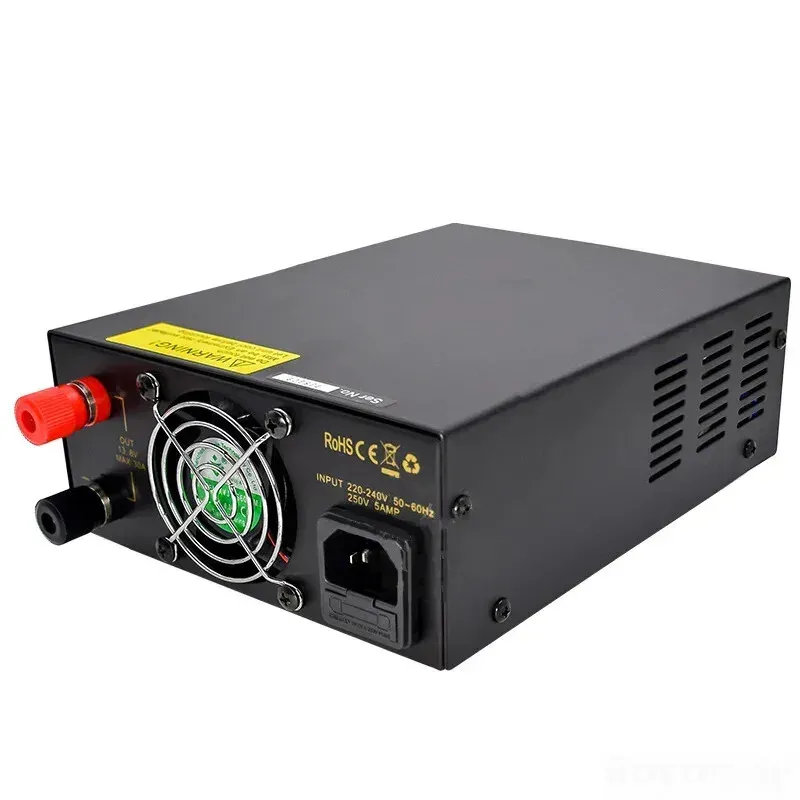
Looking for the right tool? Check the bench power supply for ham radio uk for full UK specs.
Do I need a 100W USB‑C charger for a MacBook in the UK?
For a MacBook Air (M1/M2/M3), a quality 65W USB‑C PD charger is more than sufficient. Under most loads it typically draws well under 65W, so you still have breathing room for fast-charging a phone on a second port.
However, for a 14-inch or 16-inch MacBook Pro, 100W is the more reliable choice—especially for sustained workloads. When a laptop needs more power than the charger can supply, you can see the “plugged in” state while the battery level still drops during heavy tasks. Over time, that usage pattern is not ideal.
Is a 65W USB‑C charger enough for a Dell XPS in the UK?
For a Dell XPS 13, yes: a reputable 65W GaN charger is a great match for everyday corporate use.
For a Dell XPS 15/17 with discrete graphics, it’s more nuanced. Many models accept 100W USB‑C PD, but may still warn about a “slow charger” compared with the original higher-wattage adapter. Therefore, if you want the best performance away from the original charger, 100W is the sensible baseline—while 65W is likely to feel limiting under load.
What about Lenovo ThinkPad and HP EliteBook?
Many 14-inch business laptops (for example, Lenovo ThinkPad T-series and HP EliteBook 840 lines) are designed around a 65W adapter. So, if that’s your main device, 65W is often the “exact fit” and avoids paying extra for unused capacity.
When is 65W enough (and when does it fail)?
For a large portion of UK buyers, 65W is the practical sweet spot: it can run an ultrabook, fast-charge modern phones, and handle tablets and accessories without unnecessary bulk.
However, the failure case is predictable: multi-device charging. When you plug two devices into a dual-port charger, many models reduce the laptop’s allocation (commonly to around 45W) to feed the second port. Consequently, your laptop may only maintain charge rather than increase it—especially during calls, external display use, or heavier workloads.
"According to the USB Implementers Forum (USB-IF), whilst USB Power Delivery allows much higher wattage, 100W remains a key ceiling for the vast majority of everyday consumer devices."
If you mainly want to optimise phone charging in the UK, you may not need 65W at all. For that angle, see: Best iPhone 15 Fast Charger UK: USB‑C PD/PPS Picks.
Do I need a special cable for a 100W USB‑C charger?
Yes—often you do. To reliably deliver 100W, you typically need a USB‑C to USB‑C 5A E‑Marked cable. Many common USB‑C cables are rated for 3A, which usually caps charging at 60W. So, even if you buy a 100W charger, the wrong cable can silently limit performance.
From a UK safety and compliance standpoint, also look for clear markings and reputable sourcing. In our lab experience, “no-name” cables are a frequent cause of heat, instability and inconsistent charging.
Is GaN worth it for UK chargers (Type G plug)?
Yes, especially in the UK. The Type G plug (BS 1363) is robust and safe, but it adds bulk compared with EU/US plugs. Therefore, using GaN (Gallium Nitride) helps keep a 65W or 100W charger genuinely portable, while typically reducing heat output at higher loads.
In practical terms, GaN matters because a heavy charger can wobble in worn wall sockets (common in cafés, trains and older extensions). So, if you’re choosing between two similarly specced models, a compact GaN design is usually the better UK-friendly option.
FAQ: 65W vs 100W USB‑C charger UK
Will a 100W USB‑C charger charge faster than 65W?
Only if your device can request and sustain more than 65W. Many phones and tablets won’t, and many laptops only exceed ~65W during heavier loads. Otherwise, charging speed will be similar.
Is a 100W USB‑C charger safe for an iPhone or Android phone?
Yes. With USB‑C Power Delivery, the phone negotiates what it needs. The charger won’t “force” 100W into a phone.
Why does my laptop say “slow charger connected” on USB‑C?
This usually means the charger wattage (or cable rating) is below what the laptop expects for full performance. Switching from 65W to 100W—and using a 5A E‑Marked cable—often resolves it, although some laptops still prefer their original proprietary adapter.
What should UK buyers look for on the box before buying?
Look for USB‑C PD, the wattage, and clear output profiles (for example 20V ⎓ 3.25A for 65W, or 20V ⎓ 5A for 100W). Also prefer UKCA/CE marking, a reputable brand, and (for 100W) confirmation that a 5A cable is included or recommended.
Bottom line: which should you buy?
If you want the best-value everyday choice in the UK, pick a 65W GaN USB‑C charger. If you need guaranteed headroom for a larger laptop, sustained workloads, or frequent two-device charging, a 100W GaN USB‑C charger is the smarter commercial buy—provided you also use a 5A E‑Marked cable.
Related reads: Bench Power Supply Uk - Complete UK Guide · Power Switch Power Supply - Complete UK Guide
Ready to try Jaogau Bench Power?
Shop Now — £82.90